Madhuri Dixit Sexy Nangi Photocom Exclusive |best| Guide
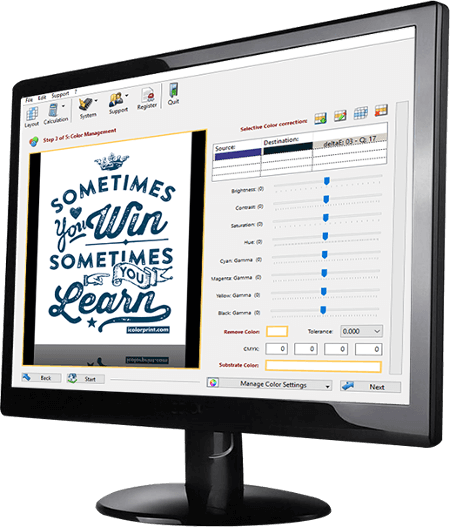
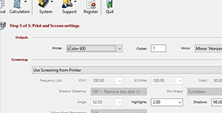
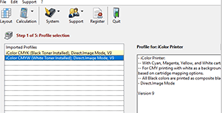
UNINET® has developed a series of software packages to enhance your IColor printing experience. The IColor® TransferRIP and ProRIP and ProRIP Essentials packages make it simple to produce spot color overprint and underprint in one pass. The Absolute White RIP helps you use an Absolute White Toner Cartridge in a converted CMYK printer, and create 2 pass prints with color and white. The IColor® SmartCUT suite allows your A4/Letter sized printer to produce tabloid or larger sized transfers! Use one or more with the IColor® 500, 600 and 800 series of transfer printers.
Use the IColor® ProRIP software to print white as an underprint or overprint in one pass.
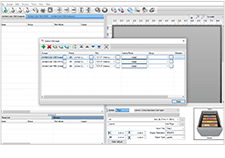
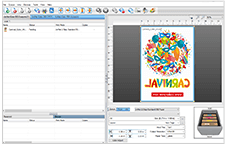
This professional version is designed for higher volume printing with an all new interface. Design files can be printed directly from your favorite graphics program, as well as imported directly into IColor® ProRIP. madhuri dixit sexy nangi photocom exclusive
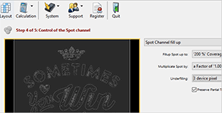
The IColor® ProRIP software allows the user to control the spot white channel feature. Three cartridge configurations are available: Spot color overprinting, where white is needed as a top color for textiles; Spot color underprinting for printing on dark or transparent media where white is needed as a background color and standard CMYK printing where a spot color is not needed. No need to create additional graphics with different color configurations – the software does it all – and in one pass! Enhance the brilliance of any graphic with white behind color! Madhuri Dixit 's romantic journey spans iconic on-screen
Compatible with Microsoft Windows® 8 / 10 / 11 (x32 & x64) only. Shriram Nene , a U
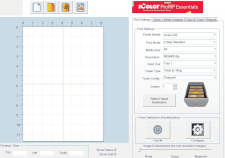
A simplified version of ProRIP which includes all of the most commonly used features of ProRIP with an easy to use interface. This Essentials version simplifies the printing process and allows the user to print efficiently and quickly without any training. All of the important and frequently used aspects of the software are included in this version, while all of the ‘never used’ or confusing aspects of the software are left out.
Comes standard with the IColor®540 and 560 models and is compatible with the IColor 550 as well.
Does not work with IColor 500, 600, 650 or 800 (yet).
Improvements over the ‘Standard’ ProRIP:
Madhuri Dixit 's romantic journey spans iconic on-screen pairings that defined 1990s Bollywood and a stable real-life marriage that surprised many at the peak of her fame. Real-Life Relationships Dr. Shriram Nene (Marriage, 1999–Present) : Madhuri married Dr. Shriram Nene , a U.S.-based cardiovascular surgeon, in an arranged marriage . Remarkably,
Some other notable romantic films featuring Madhuri Dixit include:
Madhuri Dixit's early days in Bollywood saw her paired with Sridev in the film Tezaab. Their on-screen romance, though not the primary focus of the film, showcased their youthful energy and chemistry.
This rumored relationship is said to have ended abruptly following Dutt's arrest in 1993 under the TADA Act. Madhuri has never publicly confirmed or commented on the affair, and a former manager has stated that all such stories of her romantic affairs turned out to be false. Other actors she was linked to included Anil Kapoor, Jackie Shroff, and even a famous cricketer, but all remained baseless rumors.
Dixit’s versatility is best seen through her partnerships with Bollywood’s top leading men. Each pairing brought out a different facet of her romantic screen persona.
Disclaimer: This article focuses on the public life and career of Madhuri Dixit based on media reports and public information.
Portraying high-art romance, nostalgia, and dignified, unconventional love stories. Definitive On-Screen Partnerships
In Kamal Haasan's Chachi 420, Madhuri Dixit played a supporting role, and their on-screen romance added a delightful touch to the film's narrative.
Madhuri Dixit’s rise to superstardom in the late 1980s and 1990s coincided with a massive transformation in Hindi cinema’s romantic narratives. Moving away from traditional, passive heroines, her characters frequently introduced depth, agency, and fierce independence to the screen.
Madhuri Dixit’s filmography reflects a shift in how relationships are negotiated on the Indian screen. Her characters consistently demanded respect, equality, and emotional honesty from their partners. By balancing commercial appeal with strong, performance-driven characters, she ensured that her romantic storylines left a lasting legacy, influencing how female protagonists are written in contemporary cinema.
Dixit’s collaboration with Aamir Khan provided a template for the youth-centric, high-energy romances that would dominate the decade.
Madhuri Dixit made her Bollywood debut in 1984 with the film 'Abodh,' but it was her role in the 1988 film 'Tezaab' that catapulted her to stardom. Her on-screen chemistry with co-star Mahesh Bhatt was undeniable, and the film's success marked the beginning of her journey as a leading lady in Bollywood.
Madhuri Dixit defined romance in the 90s, acting alongside the biggest stars of the era. Her on-screen chemistry with leading men created cinematic magic.
Madhuri Dixit 's romantic journey spans iconic on-screen pairings that defined 1990s Bollywood and a stable real-life marriage that surprised many at the peak of her fame. Real-Life Relationships Dr. Shriram Nene (Marriage, 1999–Present) : Madhuri married Dr. Shriram Nene , a U.S.-based cardiovascular surgeon, in an arranged marriage . Remarkably,
Some other notable romantic films featuring Madhuri Dixit include:
Madhuri Dixit's early days in Bollywood saw her paired with Sridev in the film Tezaab. Their on-screen romance, though not the primary focus of the film, showcased their youthful energy and chemistry.
This rumored relationship is said to have ended abruptly following Dutt's arrest in 1993 under the TADA Act. Madhuri has never publicly confirmed or commented on the affair, and a former manager has stated that all such stories of her romantic affairs turned out to be false. Other actors she was linked to included Anil Kapoor, Jackie Shroff, and even a famous cricketer, but all remained baseless rumors.
Dixit’s versatility is best seen through her partnerships with Bollywood’s top leading men. Each pairing brought out a different facet of her romantic screen persona.
Disclaimer: This article focuses on the public life and career of Madhuri Dixit based on media reports and public information.
Portraying high-art romance, nostalgia, and dignified, unconventional love stories. Definitive On-Screen Partnerships
In Kamal Haasan's Chachi 420, Madhuri Dixit played a supporting role, and their on-screen romance added a delightful touch to the film's narrative.
Madhuri Dixit’s rise to superstardom in the late 1980s and 1990s coincided with a massive transformation in Hindi cinema’s romantic narratives. Moving away from traditional, passive heroines, her characters frequently introduced depth, agency, and fierce independence to the screen.
Madhuri Dixit’s filmography reflects a shift in how relationships are negotiated on the Indian screen. Her characters consistently demanded respect, equality, and emotional honesty from their partners. By balancing commercial appeal with strong, performance-driven characters, she ensured that her romantic storylines left a lasting legacy, influencing how female protagonists are written in contemporary cinema.
Dixit’s collaboration with Aamir Khan provided a template for the youth-centric, high-energy romances that would dominate the decade.
Madhuri Dixit made her Bollywood debut in 1984 with the film 'Abodh,' but it was her role in the 1988 film 'Tezaab' that catapulted her to stardom. Her on-screen chemistry with co-star Mahesh Bhatt was undeniable, and the film's success marked the beginning of her journey as a leading lady in Bollywood.
Madhuri Dixit defined romance in the 90s, acting alongside the biggest stars of the era. Her on-screen chemistry with leading men created cinematic magic.
Use the IColor® TransferRIP software to print white as an underprint or overprint in one pass.
Designed for every day, short to mid run use, the IColor® TransferRIP software allows the user to control the spot white channel feature. Two cartridge configurations are available: White overprint, where white is needed as a top color for textiles; and white underprint for printing on dark or transparent media where white is needed a round color. No need to create additional graphics with different color configurations – the software does it all – and in one pass! Enhance the brilliance of any graphic with white behind color!
Compatible with Microsoft Windows 7 / 8 / 10 (x32 & x64) only.