The logic section is anchored by a specialized microprocessor that coordinates the radio’s entire operational matrix. It manages flash memory for firmware storage, EEPROM for the customer codeplug data (frequencies, signaling, tuning parameters), and controls the synthesizer, display panel, and user interface. 2. Pinouts and Interface Specifications
Verify that the Voltage Controlled Oscillator (VCO) is locked on the correct injection frequency. Measure the steering voltage of the synthesizer phase-locked loop (PLL). If it rails at 0V or close to 8V, the PLL is unlocked.
The Motorola GM3688 is a robust mobile analog radio designed for everyday operations. Before opening the chassis, a technician must understand the fundamental hardware boundaries of the specific model on the bench. Frequency Bands and Power Output motorola gm3688 service manual exclusive
If the radio codeplug requires ignition control, ensure 12V DC is applied to Pin 10 of the rear accessory connector.
Prevents over-deviation which causes audio distortion on receiving radios. The logic section is anchored by a specialized
Understanding the baseline performance benchmarks of the Motorola GM3688 is critical before performing any hardware alignments or component replacements. The radio was manufactured in both VHF and UHF variants, utilizing distinct RF power envelopes. VHF Model Specification UHF Model Specification 136–174 MHz 350–380 MHz / 403–470 MHz / 490–527 MHz Channel Capacity 64 Channels 64 Channels Power Output 1–25W / 25–45W 1–25W / 25–40W Power Supply 13.8 Vdc (11.0–16.6 Vdc range) 13.8 Vdc (11.0–16.6 Vdc range) Channel Spacing 12.5 / 20 / 25 kHz 12.5 / 20 / 25 kHz Frequency Stability Receiver Sensitivity 0.35 µV (12.5 kHz) typical 0.30 µV (25 kHz) typical Environmental Sealing IP54 (Rain/Dust resistant) IP54 (Rain/Dust resistant) Shock / Vibration MIL-STD 810C, D, E & TIA/EIA 603 MIL-STD 810C, D, E & TIA/EIA 603 Component-Level Circuit Diagnostics
The remains a legendary workhorse in heavy industries like construction, logistics, taxi services, and manufacturing due to its rugged architecture and exceptional audio clarity. While Motorola Solutions has officially discontinued this analog model, thousands of units remain active worldwide, making an exclusive, deep-dive service manual guide essential for bench technicians and fleet managers looking to maintain, troubleshoot, and repair these durable devices. Pinouts and Interface Specifications Verify that the Voltage
The mainboard layout of the GM3688 is divided into three primary functional domains: the Receiver Front-End, the Transmitter Power Amplifier (PA), and the Control/Logic Section. 1. Receiver Front-End Diagnostics
Specific alignment procedures for PTT-ID , Emergency Signalling , and Radio Check decode functions . How to Access
Add Sense for Chrome works in both the build-in Sense client and in mashups using the Capabilities APIs
Charts displayed with the API through getObject and visualization.show will be tagged.
Used app(s) will be displayed in the bottom right corner.
Properties and other buttons will work just as in the client.
If your mashup shows charts from more than one app, all will be listed.
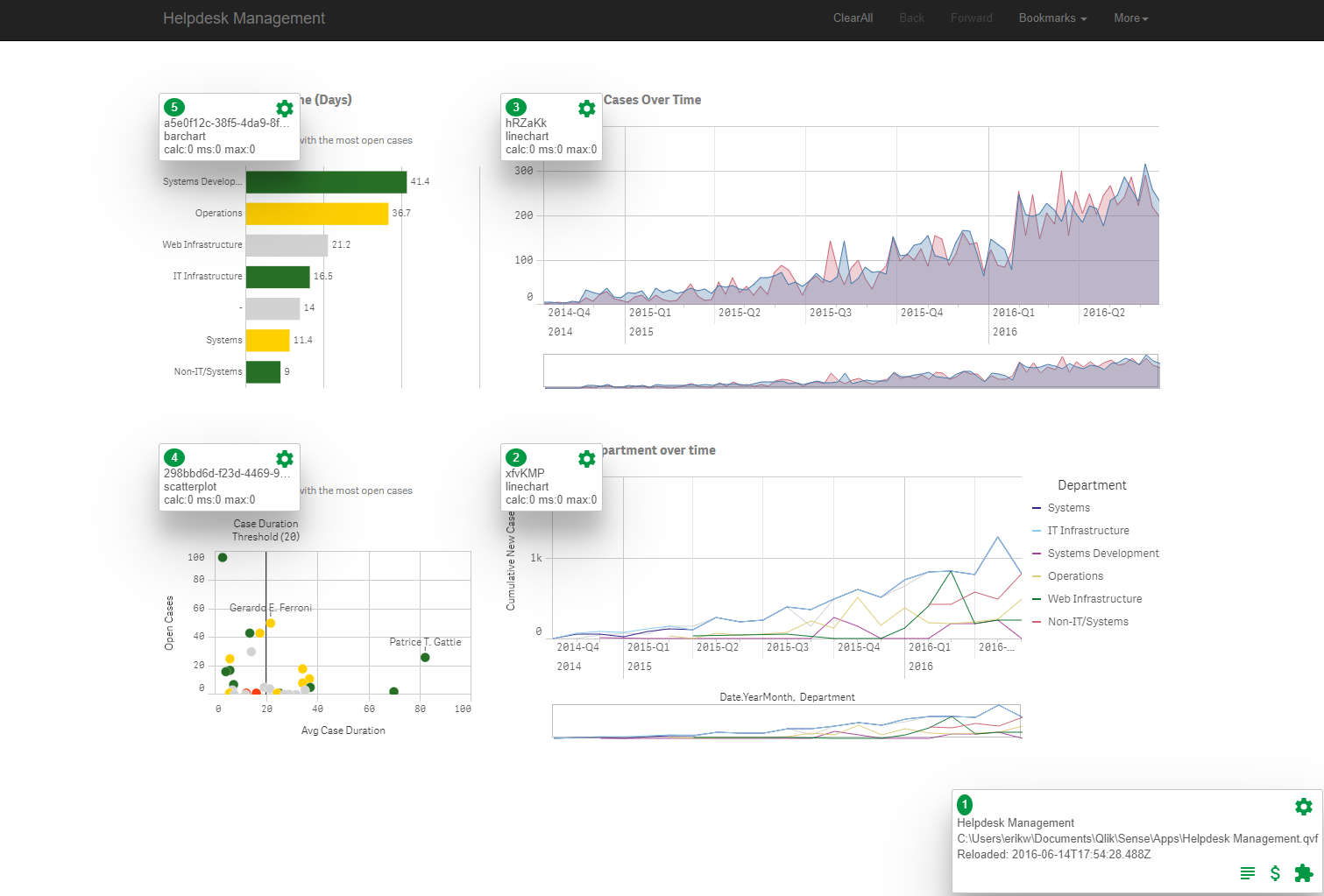
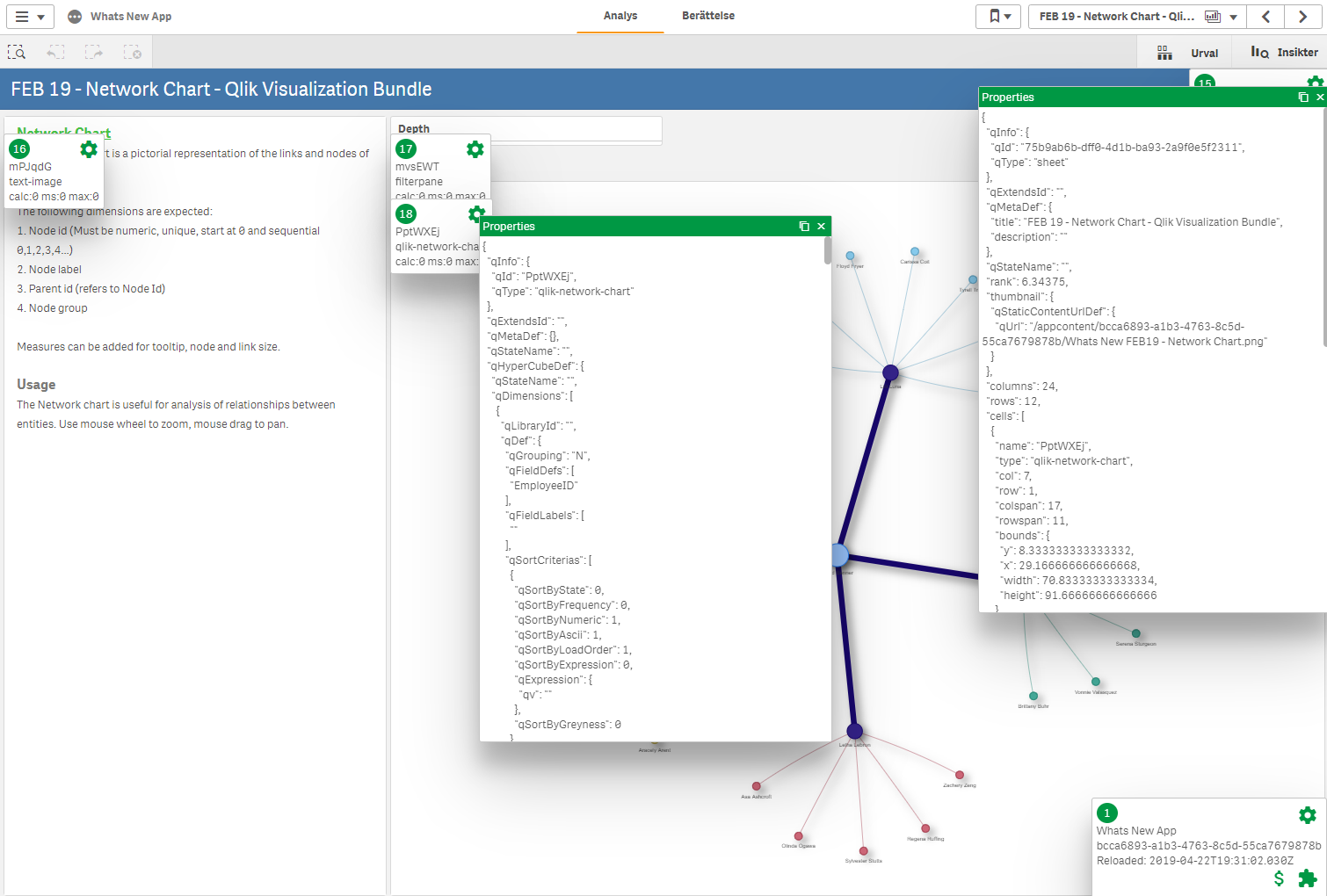
For all charts, sheets and the app you can click on the cogwheel.
That will display the properties for the object.
Use this to troubleshoot or to investigate what settings produce this chart.
You can display several objects properties at the same time, to make comparisons.
Properties can also be copied to clipboard.
From the app box you can inspect the script, variables and app properties.
Windows can be open at the same time and moved.
You can also copy window contents, complete or partly, to the clipboard.
If you do not have access to the script the script button will not be available.
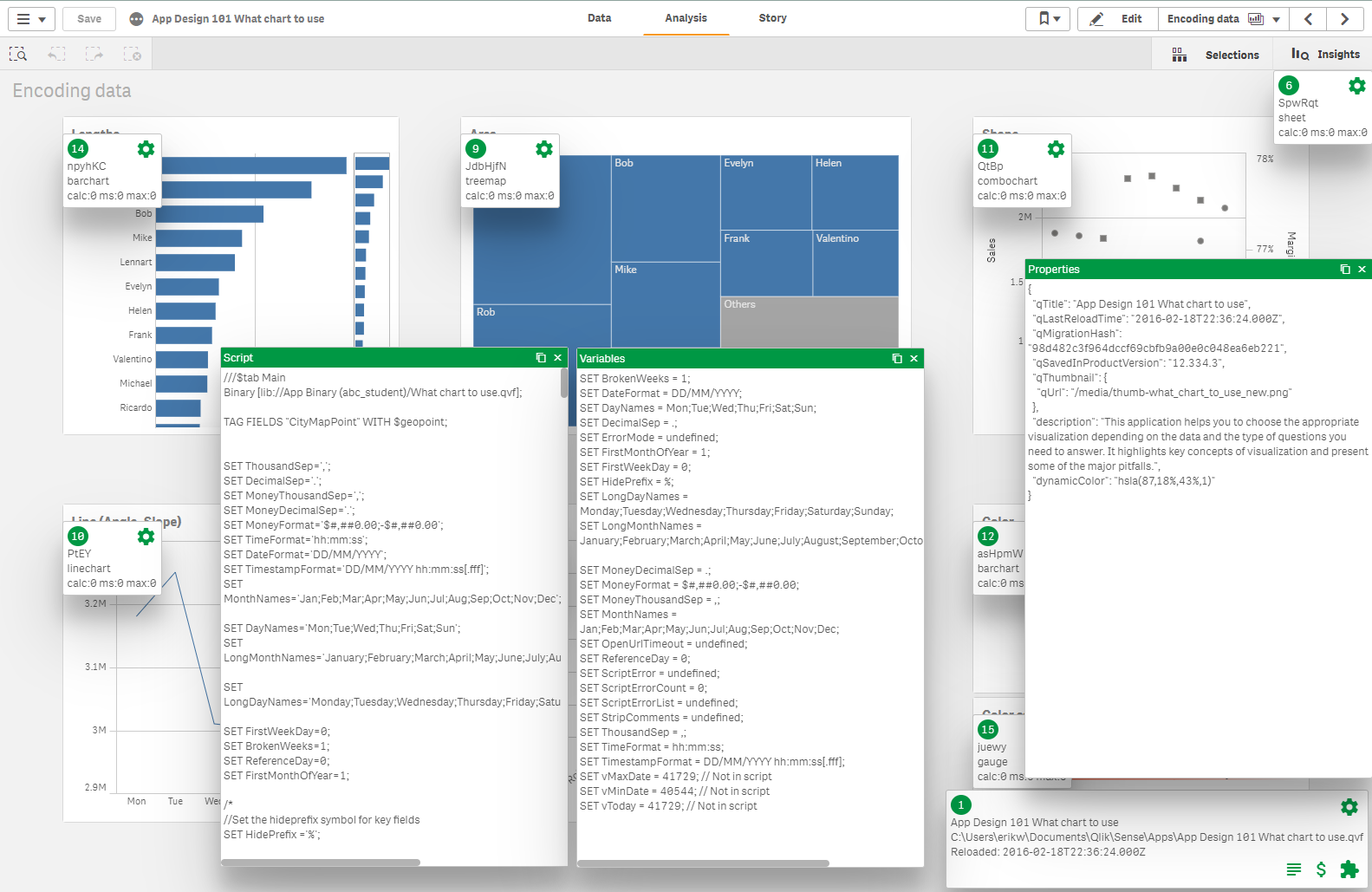
You can also easily see what extensions and charts are used in your app.
Just click on the extensions button in the app info box.
You will get a list of all axtensions and built-in charts are used in your extension, with title and sheet title
Master objects are also included.
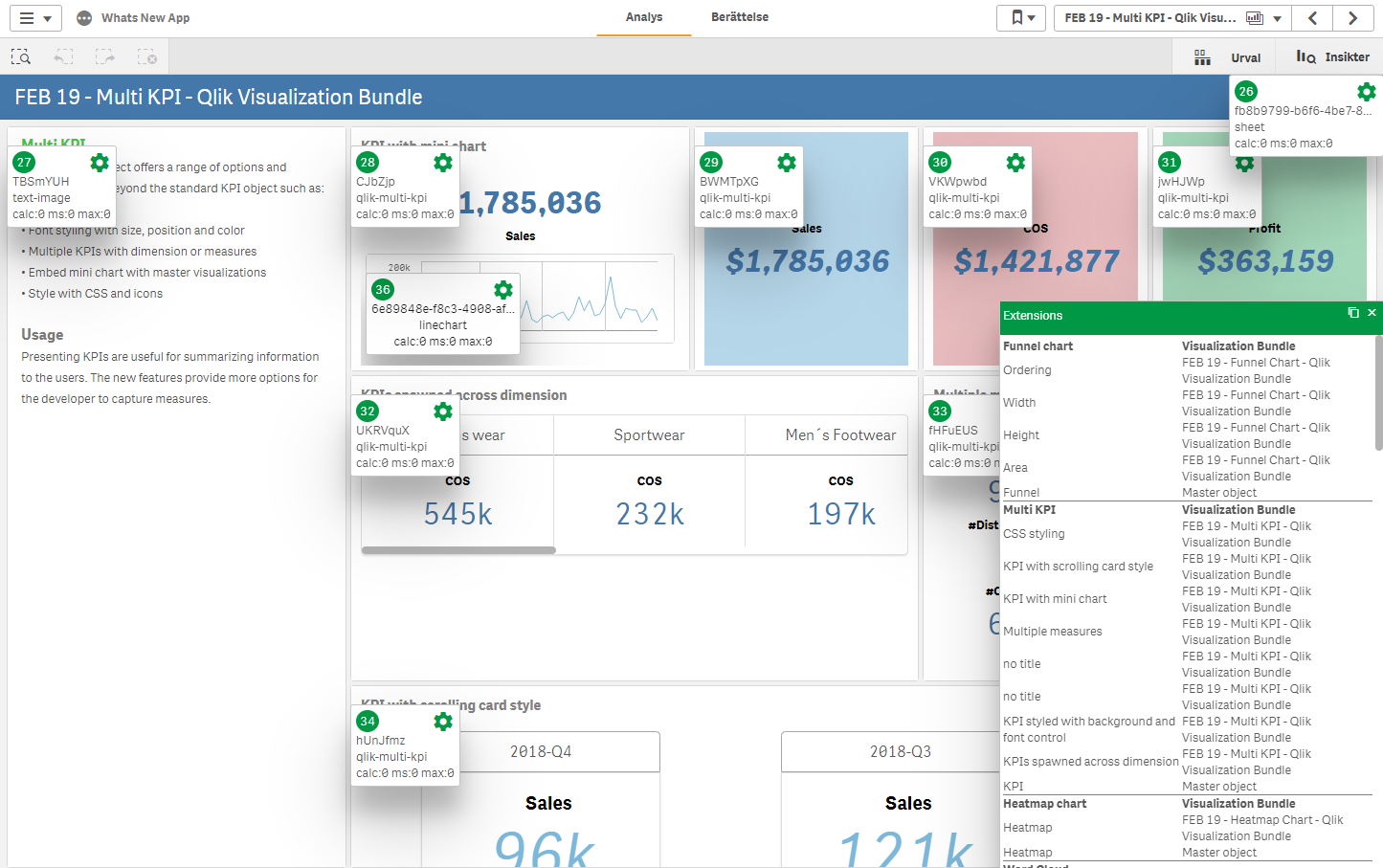
The extension can also help you find performance problems.
When you enable the extension on a page, whether it's the standard client or a mashup, it will start recording recalculation times.
Every time an object is revalidated then extension will register time elapsed for recalculation.
It will also count how many revalidations has occured.
If the object is no longer on the screen, the extension will continue to monitor recalculations, so when you re-enable it you will get all the statistics.