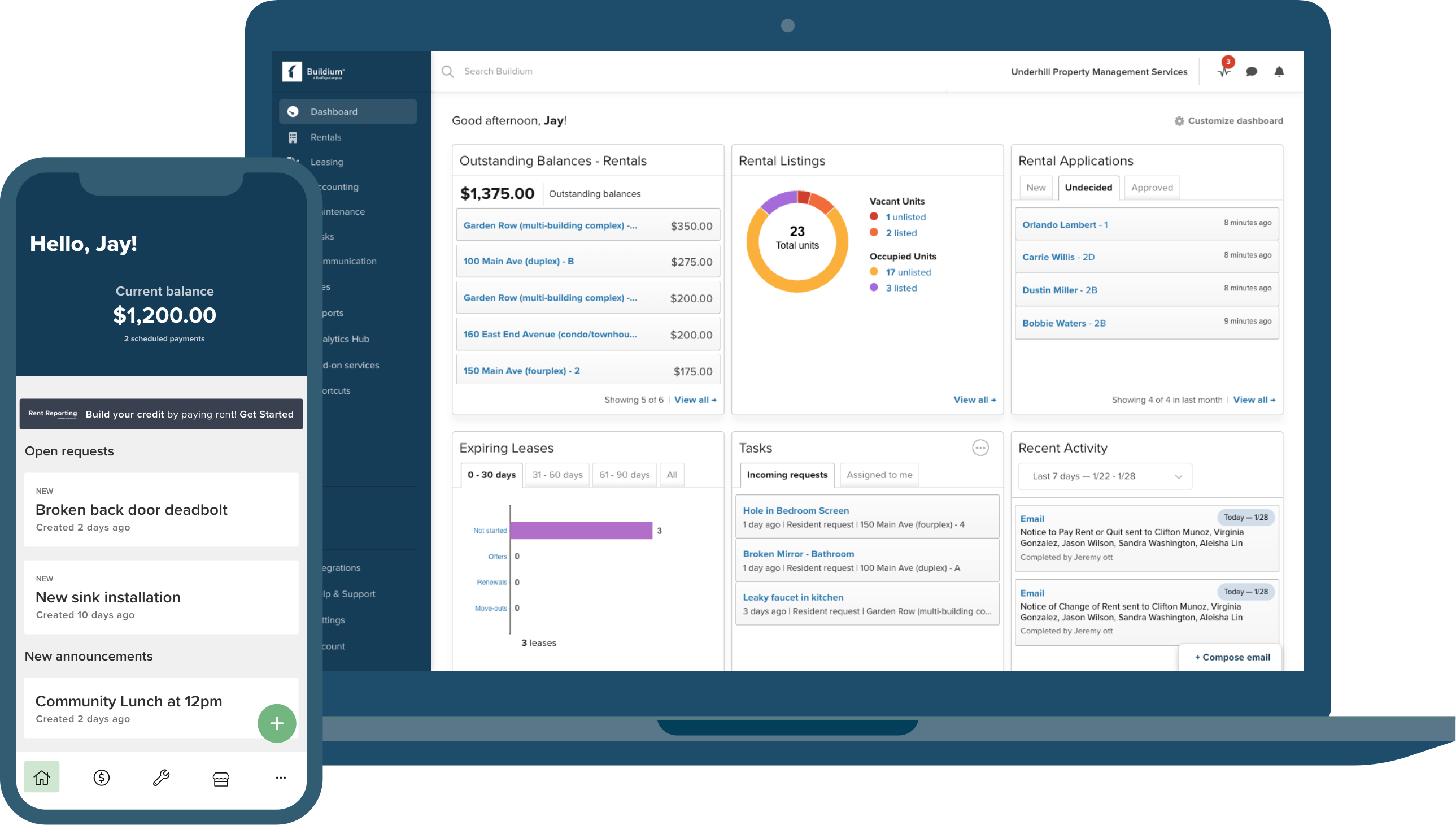
Every feature. All in one platform.
Purpose-Built Accounting
Get the guided workflows and automations made for property management that non-accountants want with the depth pros demand.
- Automatic bank reconciliation
- 1099 e-filing in minutes
- Property-specific financial reporting
View Accounting Features
Rent Collection
Automate payments for your residents, owners, and vendors while opening up new revenue streams inside your portfolio.
- Convenient online rent and bill payments via ACH and credit card
- Funds automatically transferred to your bank account
- Optional transaction fees cover your costs or generate extra revenue
View Payments Features
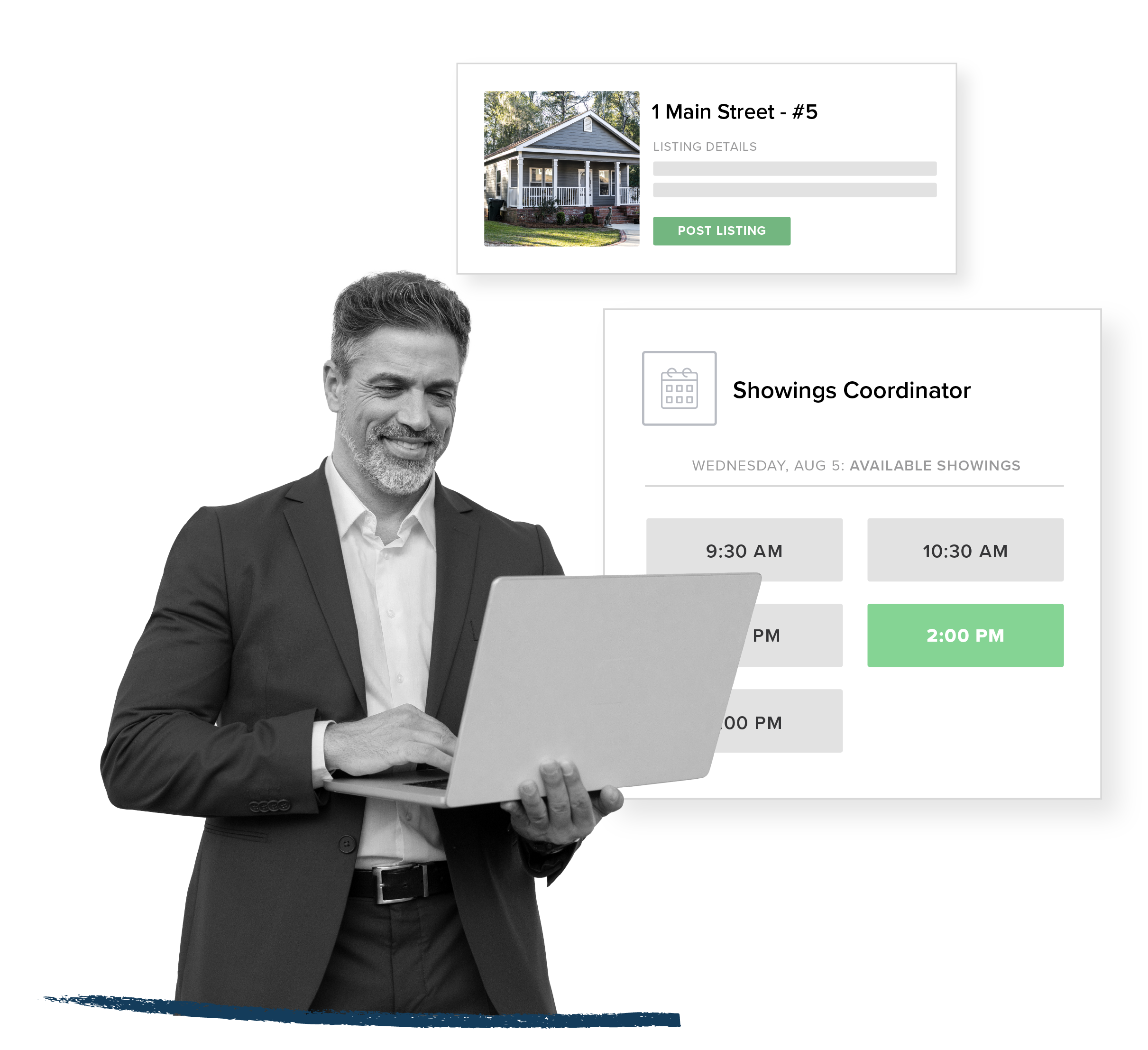
Listing + Leasing
Offer online leasing that fills vacancies fast and delights incoming residents.
- One-touch syndication to market your listings across top rental sites
- Seamless online rental applications with built-in tenant screening services
- 100% digital, paper-free leasing process
View Leasing Features
Maintenance + Operations
Find efficiencies with every work order plus dig into analytics that back up smarter vendor management. virtuabotixrtch arduino library
- 24/7 status tracking from anywhere
- Recurring tasks scheduling
- Integrated bill and invoice management
View Maintenance Features
The Best Property Management Apps
Serve up the smoothest experience with top-rated mobile apps that put your communication on point with residents and owners.
- Highly rated property manager and Resident Center apps
- On-the-go connectivity for faster response times
- Self-service options that reduce calls and emails
View Features
Industry-Leading Integrations
Centralize and build out your tech stack through an ecosystem of leading integrations in Buildium Marketplace.
- Proven apps from leading proptech partners
- No monthly subscriptions (pay as you go)
- Links right into your Buildium account
Discover Marketplace
Made for mixed portfolios
Virtuabotixrtch Arduino Library !free! Now
myRTC.updateTime(); int currentHour = myRTC.hours; int currentMinute = myRTC.minutes; int currentSecond = myRTC.seconds;
Performance will be slower but functional.
user wants a long article about the "virtuabotixrtch arduino library". I need to gather comprehensive information. I will search for the library, its purpose, features, usage, and related resources. I'll use multiple search queries to cover different aspects. search results show some forum posts and tutorials. The user might have misspelled "virtuabotixrtch" as the correct name seems to be "virtuabotixRTC". I'll need to gather information from these sources. I'll open some of the promising results. search results provide various sources including forum posts, GitHub repositories, and tutorials. I have gathered information about the library's usage, examples, and installation. Now I need to write a long article. I'll structure it with an introduction, explanation of what the library is, key features, supported RTC modules, installation instructions, basic usage, code examples, project ideas, troubleshooting, comparisons with other libraries, and a conclusion. I will cite the sources appropriately. VirtuabotixRTC library isn't a new tool, but for many Arduino enthusiasts, especially those who got their start in the mid-2010s, it represents a simple, direct, and highly effective way to get a real-time clock up and running. While newer, more feature-rich libraries now exist, the VirtuabotixRTC library remains an excellent choice for hobbyists who prefer a straightforward, no-fuss approach to timekeeping with their Arduino projects.
Uses a 3-wire connection (SCLK, I/O, and CE/RST) rather than standard I2C or SPI. Individual Data Access: Allows users to easily access specific time elements like dayofmonth as individual variables. Persistent Timekeeping:
This library is most commonly used with the , a popular, low-cost timekeeping module that counts time even when the main microcontroller loses power, thanks to an onboard backup battery. Core Features of the VirtuabotixRTC Library
While you could attempt to measure time using Arduino functions like millis() or delay() , these methods are highly inaccurate and will reset the moment your device loses power. An RTC ensures your project maintains indefinitely. Key Features of the VirtuabotixRTC Library
You only need to set the time once (e.g., in setup() ). After uploading this once, the setDS1302Time line and re-upload so the clock doesn't reset every time the Arduino restarts.
: Providing direct access to individual time variables (e.g., myRTC.hours myRTC.seconds ) for display or logic. Basic Wiring Setup
95% Customer Support Satisfaction Rating
Success is our
middle name (literally)
Our Customer Success Team has spent years perfecting our renowned customer service model. From the moment you begin onboarding, your business is our sole focus.
- Reliable, live phone support in minutes (not hours)
- 85% of customer support calls are resolved on the first call
- 34% increase in support agent staffing since 2024
Customer CareOnboarding

Need an app? Add it in a snap.
Buildium Marketplace gives you on-demand access to the latest property management tools and platform integrations – from a growing roster of leading proptech partners.
Select Buildium Marketplace integrations:
myRTC.updateTime(); int currentHour = myRTC.hours; int currentMinute = myRTC.minutes; int currentSecond = myRTC.seconds;
Performance will be slower but functional.
user wants a long article about the "virtuabotixrtch arduino library". I need to gather comprehensive information. I will search for the library, its purpose, features, usage, and related resources. I'll use multiple search queries to cover different aspects. search results show some forum posts and tutorials. The user might have misspelled "virtuabotixrtch" as the correct name seems to be "virtuabotixRTC". I'll need to gather information from these sources. I'll open some of the promising results. search results provide various sources including forum posts, GitHub repositories, and tutorials. I have gathered information about the library's usage, examples, and installation. Now I need to write a long article. I'll structure it with an introduction, explanation of what the library is, key features, supported RTC modules, installation instructions, basic usage, code examples, project ideas, troubleshooting, comparisons with other libraries, and a conclusion. I will cite the sources appropriately. VirtuabotixRTC library isn't a new tool, but for many Arduino enthusiasts, especially those who got their start in the mid-2010s, it represents a simple, direct, and highly effective way to get a real-time clock up and running. While newer, more feature-rich libraries now exist, the VirtuabotixRTC library remains an excellent choice for hobbyists who prefer a straightforward, no-fuss approach to timekeeping with their Arduino projects.
Uses a 3-wire connection (SCLK, I/O, and CE/RST) rather than standard I2C or SPI. Individual Data Access: Allows users to easily access specific time elements like dayofmonth as individual variables. Persistent Timekeeping:
This library is most commonly used with the , a popular, low-cost timekeeping module that counts time even when the main microcontroller loses power, thanks to an onboard backup battery. Core Features of the VirtuabotixRTC Library
While you could attempt to measure time using Arduino functions like millis() or delay() , these methods are highly inaccurate and will reset the moment your device loses power. An RTC ensures your project maintains indefinitely. Key Features of the VirtuabotixRTC Library
You only need to set the time once (e.g., in setup() ). After uploading this once, the setDS1302Time line and re-upload so the clock doesn't reset every time the Arduino restarts.
: Providing direct access to individual time variables (e.g., myRTC.hours myRTC.seconds ) for display or logic. Basic Wiring Setup